Showing posts with label baseball. Show all posts

Friday, August 8, 2025

Willie Mays: The Life The Legend – James S. Hirsch, 2010 ★★★

Celebrating a Quiet Giant

In baseball, statistics are the ultimate measure of achievement, yet they fail to do justice to one of the game’s greatest legends. Willie Mays holds no major career records which jump to mind. In areas like stolen bases or home runs, his totals, while impressive, did not dominate even in his own time, let alone looking back now.

Yet when considering the totality of the game, and all the players who ever played it, Mays stands apart like a colossus.

In Willie Mays: The Life The Legend, James S. Hirsch asks the question: “Was he better than the Babe?” Even if you sense he would like to say yes, he doesn’t. Babe Ruth changed the game with his home runs, and that after establishing himself as a champion left-handed pitcher. But Hirsch makes a strong case for Mays anyway.

Sunday, February 2, 2025

The New Bill James Historical Baseball Abstract – Bill James, 2001 ★★★½

Subtraction by Addition

Any book crammed with more a century of lore can’t help but fascinate. That is especially true for me when the subject is baseball and the writer is Bill James, a scholar who brings both a deep analytical perspective and sharply heterodox views to his writing.

In 1986, James took time out from his annual takes on the best and worst of the year in the sport to publish his magnum opus, The Bill James Historical Baseball Abstract. Running over 700 pages, it reviewed baseball’s evolution decade by decade, then ranked top players at each position. As James’s mind can go off in so many fruitful directions, it was the reference book equivalent of potato chips for diamond buffs.

Fifteen years later, James went back to do it again. The result was even more players, more pages, and more insights, specifically around the concept of Win Shares. You know what? It isn’t quite as good.

Sunday, November 3, 2024

The Bill James Baseball Abstract 1988 – Bill James, 1988 ★★★★

Knowing When to Leave

Bill James often talked about baseball careers being like watermelons. Even with the best of them, you had what he called the meat of the melon, the center part that was the ripest and easiest section to enjoy, but to get to them, you have to deal with rinds.

“Whenever you sign a player over the age of 28, you are buying into a market that is certain to decline,” he writes about the 1987 Baltimore Orioles, a team with a fair number of 30-and-over players.

Age is the great killer of talent, James would say. Apparently, the same thinking guided James himself, who made the 1988 edition of the Bill James Baseball Abstract his swansong, just a dozen years after it began. In a postscript, he claims to have lost his joy.

Saturday, September 7, 2024

The Bill James Baseball Abstract 1987 – Bill James, 1987 ★★★

Eyes on the Prize

It was the best of times, it was the worst of times for baseball in 1986.

On the one hand, you had infielders who defied gravity, power pitchers out of Marvel Comics, a postseason for the ages, and stolen bases dominating the game at a level they never did before or would again.

On the other hand, you had collusion by greedy owners watering down the game, recreational drug use wrecking careers and lives, and a growing realization our national pastime was losing ground to football.

Fortunately, Bill James was still producing annual Abstracts to lend his analytical perspective and a touch of humor to the situation.

Saturday, July 27, 2024

The Bill James Baseball Abstract 1986 – Bill James, 1986 ★★★

In Search of Lasting Greatness

Over the brief run of his annual looks back on individual baseball seasons, Bill James was concerned with demarcating the difference between ordinary performance and true excellence. This is made clear in this, one of the last Abstracts which examines 1985.

It was a year like no other for James, because his team, the Kansas City Royals, finally won it all.

In the best and longest section of the book, James examines the history of baseball in Kansas City, from the dog days of the Athletics in the early 1960s to the Game 7 whipping of the Cardinals last October. It could have been a book of its own. Perhaps it should have been, because the rest of Baseball Abstract 1986 can only pale in comparison.

Monday, January 1, 2024

Casey: The Life And Legend Of Charles Dillon Stengel – Joseph Durso, 1967 ★★

A Winning Personality

The only man in baseball to have had his uniform number retired by both the New York Mets and the New York Yankees, Casey Stengel won those honors for entirely different reasons.

For the Yankees, he managed a team to an unmatched five straight World Series Championship seasons, and notched two more World Series wins and three further appearances in just 12 years. For the Mets, he diverted attention from epically bad baseball with a unique gift of gab and invigorating showmanship.

That the Mets retired #37 four years before the Yankees seems appropriate. Stengel’s personality often overshadowed his performance. You sense this reading Joseph Durso’s biography of the man, which was published between those two events and commemorating Stengel’s induction in baseball’s Hall of Fame as a case of winning personality.

Saturday, March 11, 2023

The New Thinking Fan’s Guide To Baseball – Leonard Koppett, 1991 ★½

Change for the Worse

When someone creates something widely regarded as a classic of its kind, the impulse to go back and touch it up should be stubbornly resisted. Even if you are its creator, there is something in the way your work engaged the public that no longer belongs to you alone. Whatever that is, it should be respected.

Back in 1967, a beat reporter named Leonard Koppett put out a book about baseball that crystalized the way many people thought about the game. The Thinking Man’s Guide To Baseball took in a range of topics, analyzed them in depth, explained why managers and players did what they did, detailed the roles of owners, umpires, media, scorers, and more. It was thoughtful, original, and highly praised.

I wish I had gotten to read that, but I didn’t. Instead I had this 1991 revision, a grab bag of sententious truisms with zero flow and an occasional 1990s player sprinkled amid heaps of anecdotes spotlighting players from much older times.

Saturday, October 8, 2022

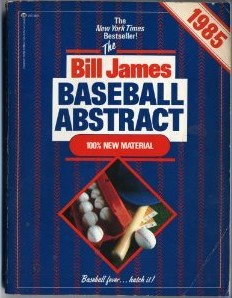
The Bill James Baseball Abstract 1985 – Bill James, 1985 ★½

Phoning It In

People who complain about the use of sabermetrics in baseball miss the art of the matter. Statistics tell a story, lots of stories, all awaiting a chance to delight and deepen your appreciation of the game.

Normally this is where I bring in Bill James as my guru, whipping out often amusing, sometimes astounding facts from endless seas of data. So what can I say when he delivers a book so tiresome that it makes the naysayers seem like they have a point?

Wednesday, August 3, 2022

Harry Hooper: An American Baseball Life – Paul J. Zingg, 1993 ★★

Shout Out to a Forgotten Legend

Baseball stars flash across the sky so quickly you often not only miss them, but never know they were there. Take Harry Hooper.

A key piece of four World Championship teams when he played for the Boston Red Sox, Hooper was still overshadowed by two other outfielders. Master of the sliding catch and stealing bases, he still holds the record for the most assists at his position yet statistically falls a bit short of the greats of his era. Everyone admired him, but despite his smarts he got passed over for manager jobs after retiring.

Paul J. Zingg asks some questions about why Hooper is so obscure among the players enshrined in baseball’s Hall of Fame, and unknowingly provides answers, too. Hooper had a stellar career, alright, but he also makes for dull copy.

Saturday, March 19, 2022

The Whiz Kids And The 1950 Pennant – Robin Roberts and C. Paul Rogers III, 1996 ★★½

And Now a Word from the Rest of the Country

For much of the 20th century, American baseball was largely the property of one city. So when another city’s ballclub, one shut out of the World Series for 35 years, finally did play in one, it made for a season to remember, regardless of the final outcome.

Perhaps that was why they called the 1950 Philadelphia Phillies “the Whiz Kids,” not just because they were so young but because they whizzed across the sports landscape for a bright, quick moment.

Robin Roberts was a young pitcher on that National League Champion team. Forty-six years later, he published a memoir with co-writer C. Paul Rogers III about the experience which serves as a serviceable sports history of a team easily overlooked amid the behemoth legacies of Yankees, Giants, and Dodger teams from that era.

Thursday, December 9, 2021

Babe: The Legend Comes To Life – Robert W. Creamer, 1974 ★★★

Too Much Perspective

Visiting his home turf of Yankee Stadium for what proved his last time, on Opening Day 1947, a cancer-stricken Babe Ruth rasped out what seems in retrospect a bittersweet epitaph on his singular life:

“The only real game in the world, I think, is baseball.”

By then, Ruth’s life had become a shell of what it was, both from the disease slowly killing him and his exile from the game that gave his life its meaning, purpose, and glory. Robert Creamer’s 1974 biography puts in all in perspective. Or as Spinal Tap’s David St. Hubbins once put it, as he beheld the grave of another idol, “too much bleedin’ perspective.”

Thursday, September 2, 2021

The Bill James Baseball Abstract 1984 – Bill James, 1984 ★★

The Stabby Side of Sabermetrics

They look and feel like old phone books, but don’t be fooled. Not all vintage Bill James Baseball Abstracts are alike. The sport changed, and so did James, sometimes for the better, sometimes not.

Take The Bill James Baseball Abstract 1984, where evergreen analysis and solid insights regarding the 1983 Major League season are undercut by a snarky, defensive tone. Was success spoiling Mr. James? Or was it not coming fast enough?

Friday, March 26, 2021

You Know Me Al: A Busher's Letters – Ring Lardner, 1916 ★½

Just Getting it Over

People who talk classic American fiction sooner or later get round to Ring Lardner.

Many talk about how unfairly underrated he is, how he made slang not just respectable but lyrical, or perfected such techniques as the unreliable narrator and character humor into staples of the form.

Then there are a miserable few who think he was rated just about right as a short fiction specialist, where his gifts for colloquialism, narrative voice, and irony shine brightest.

Sorry to say, I’m one of them, admire him though I do.

Saturday, January 16, 2021

The Summer Game – Roger Angell, 1972 ★★★★½

Diamonds are Forever

Last September marked the 100th birthday of baseball writer Roger Angell, a bittersweet occasion for longtime admirers like myself. While certainly pleasant to think of him still around and hopefully enjoying life, I find myself floored, too.

Time’s passage is a dominant theme of this, Angell’s first and most famous book on the sport: “Since baseball time is measured only in outs, all you have to do is succeed utterly; keep hitting, keep the rally alive, and you have defeated time. You remain forever young.”

While focused on the transitory nature of youth as seen in the lens of a national pastime, The Summer Game is exactly that, a book that somehow remains forever young.

Sunday, September 27, 2020

Can’t Anybody Here Play This Game? – Jimmy Breslin, 1963 ★½

Who’s On First? Who Cares!

Here’s a thought: A book has to be about something. Find an interesting topic and really delve into it, examine it from different angles, give it a beginning and an ending and build a thesis around it.

Legendary newspaper columnist Jimmy Breslin found a way around that and wrote what is hailed by many as one of the best baseball books ever. I don’t even think it’s the best book about the 1962 New York Mets.

Saturday, August 8, 2020

October 1964 – David Halberstam, 1994 ★★★½

How Success Got Untrenched

Some World Series mark time; others define them. The 1964 World Series belongs in the latter category; David Halberstam explains why.

Players were still regarded as property then; their careers dictated by greedy, sometimes capricious owners. Television amplified and monetized their success. Pitchers were becoming more dominant as the strike zone was expanded and raised.

Most importantly, the racial divide of the game was changing, if slowly. Nearly 20 years after Jackie Robinson integrated baseball, there were still many whites who didn’t care for blacks, including some American League club owners.

Thursday, July 2, 2020

The Glory Of Their Times – Lawrence S. Ritter, 1966 ★★★★½

Scraping Off the Sepia

Sometimes they still call baseball Our National Pastime; in the early part of the 20th century it really was the only game in town. Yet what went on in the Major Leagues then seems impossible today.

Cy Young threw 511 career victories, and 750 complete games. In 1909, Ty Cobb led the majors both in batting average (.377) and home runs (9). Cobb’s teammate Sam Crawford hit over 300 triples in his career.

When Rube Marquard and Babe Adams pitched against each other on July 17, 1914, both went the distance – 21 innings.

Friday, April 24, 2020

The Bill James Baseball Abstract 1983 – Bill James, 1983 ★★★

A Banquet of Numbers

Is it possible to be so steeped in knowledge that you lose all sense of proportion explaining something? Are there factoids so trivial you risk getting buried by them when you take them too seriously?

I mean, how exercised can one get about stolen bases?

If you are Bill James, and the year is 1983, when stolen bases were all the rage and no one noticed their lack of value when it came to winning or losing ballgames, you took a stand and chanced the consequences.

Monday, February 24, 2020

If At First... – Keith Hernandez & Mike Bryan [Updated 1987 Edition] ★★★★

Game-by-Game with Captain Clutch

No sport tests endurance like baseball. There are 162 games in a season, not counting the postseason. Each game consists of nine innings, with a possibility for unlimited extra innings. Even marathons have finishing lines; not so baseball.

Baseball can be as much a mental drag as a physical one, especially when you have a divorce and drug accusations hanging over your head. Such was the case for Keith Hernandez in 1985, the season chronicled in this memoir.

Monday, September 2, 2019

How Life Imitates The World Series – Thomas Boswell, 1982 ★★★½

Dealing Out Poetry and Hard Slides

Baseball lends itself to two kinds of writing styles, lyrical and analytical. Thomas Boswell is a rare baseball writer who pulls off both with equal finesse.

Whether writing about stars or taking in the sport’s appeal to all ages, Boswell waxes poetic and, at times, sentimental about the communal power of the game, its power to simultaneously apotheosize and humanize its actors. But before those Ken Burns violins get going, Boswell throws in a zinger or one-liner to make clear he’s no sap.