Showing posts with label Roman history. Show all posts

Wednesday, December 4, 2024

Claudius The God – Robert Graves, 1935 ★★★★

Perils of Absolute Rule

A sequel to any great novel faces a steep challenge measuring up, especially when the original works well enough alone. After barely surviving the perils of the world’s most dangerous family, only to be made Emperor of Rome, how can poor Claudius entertain us now?

With Claudius The God, it is no longer a matter of surviving, but reigning. Will Clau-Clau-Claudius, the stuttering, staggering, drooling leader of the greatest empire ever known, make a royal hash of his empire, or restore a measure of Roman sensibility and prosperity?

For much of the novel, he seems on the road to creating marked improvement for his people and his legacy. Then he realizes it isn’t good to be the king, not for him and not for his people.

Saturday, September 28, 2024

The Twelve Caesars – Suetonius, c. 121 ★★★★★

When Bias Isn't Such a Bad Thing

Can a biased historical account be preferred over one that is more even-handed? It’s not an easy ethical question, but in terms of invigorating a reader with the spirit of a lost time, not to mention crafting a deep-dish narrative that pulls you in, the answer can be yes.

That’s even more true if the writer is Suetonius, and the work this account of the early rulers of the Roman empire.

Sharp character sketches and piquant social commentary make the First Century A. D. come alive in a way that makes you believe you are really half-back in time, reluctant to realize much of what he was writing was tabloid journalism for the stylus age. Not fiction, but likely blown well out of proportion for the sake of readability and old grudges.

So what!

Sunday, January 14, 2024

Roman Britain: Outpost Of The Empire – H. H. Scullard, 1979 ★★½

Ruling Britannia

Long before Great Britain became the world’s greatest empire, it was for 400 years a colony of another empire called Rome. What did Rome ever do for the British? Plenty, according to H. H. Scullard, including introducing moldboards to plows, paving to roads, and cats to homes.

There was also the creation of cities, specifically one at the mouth of the Thames River known today as London. If it wasn’t for war, famine, and slavery, all of which all had existed before the Romans came, one can see why the British regarded their colonization to be a blessing.

Especially when it was all over in a relative blink of an eye.

Sunday, November 5, 2023

The Battle For Gaul – Julius Caesar, 58-50 B. C. ★★★½ [1980 Translation by Anne & Peter Wiseman]

Sic Transit Gloria Mundi

How often do you think of the Roman Empire? It’s not just a question; these days it’s a meme, mocking dreamers in no hurry to grow up. Imagining a world brought into clearer order is tempting. Reading about it as it happens can satisfy the hopelessly boyish at heart.

Julius Caesar had no such agenda when writing these episodic narratives of his conquests across France and parts beyond. His objective was political. Romans had long suffered from barbarian attacks. Now Caesar was doing something about it, at a time when his main rival Pompey enjoyed a 20-year head start conquering the rest of the known world.

Caesar sought glory and dictatorship. What he achieved instead was a work of history that would endure in Western culture long after the empire he helped to build had collapsed into ruins and darkness.

Sunday, January 29, 2023

Antony And Cleopatra – William Shakespeare, c. 1607 ★★★½

Love as a Losing Game

Making sense of a Shakespeare play can be a challenge; it usually takes me a couple of readings to get a handle on it. Antony And Cleopatra is much murkier; I need to peruse the scholarly criticisms before I could decide whether it was terrific or not very good at all.

This is not too embarrassing an admission. The play is famously hard to classify. It has the build-up of a comedy and the ending of a tragedy, so maybe label it a comi-tragedy, but then consider it’s also a history play built around a famous romance. With motivations changing all the time, it’s easy to bounce around on what is supposed to be happening.

It is also a rare Shakespeare sequel, stuffed to the rafters with some of the Bard’s most vibrant and beautiful language outside the sonnets:

Friday, November 4, 2022

Julius Caesar – William Shakespeare, 1599 ★★★★½

No Prize for Second Place

A play that needs no introduction, Julius Caesar is a terrific starting place for knowing the art and majesty of William Shakespeare. Whether read as tragedy or history, it is an easy way to begin a love affair with the Bard.

It was the Folger edition of Julius Caesar that grabbed me back in the ninth grade, seeking distraction while flunking all my classes. Something about its brooding cover – a lean Roman figure against a marble backdrop – drew me in. It had it all: Indelible characters, hard-hitting action scenes, layers of ambiguity, and text that you can grasp readily thanks to the Folger practice of laying out the tricky parts on the opposite page.

Sunday, July 17, 2022

Helena – Evelyn Waugh, 1950 ★★★½

Something Better than History

History stops for no one, but occasionally makes detours. Helena tells of one such detour brought on by an old woman which changed the world.

Helena was the ex-wife of one emperor and the mother of another. More to the point, as Evelyn Waugh presents her, she crystalized the dawn of the Christian era in Europe with an act of faith that magnified the role of religion in the future of the West.

Imbued by the spirit of the Magi, Helena offers up a simple prayer: “For his sake who did not reject your curious gifts, pray always for all the learned, the oblique, the delicate. Let them not be quite forgotten at the throne of God when the simple come into their kingdom.”

Friday, November 24, 2017

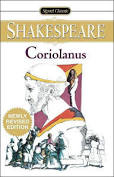
Coriolanus – William Shakespeare, c. 1609 ★★★

John Galt in a Toga

Any Shakespeare play that leaves people with totally different interpretations regarding the nature of the lead character can’t be all bad.

The first time I read Coriolanus was in college. A kindly professor laid out the case for seeing Coriolanus as a kind of fascist strongman brought down by his contempt for the people. I went away comforted in my small-L liberalism. The next time I read it, it was hard not to see Coriolanus as something else entirely, a deserving member of the meritocracy brought down by an envious, parasitic mob moved by envy, not need. In short, John Galt in a toga.

Friday, May 8, 2015

I, Claudius – Robert Graves, 1934 ★★★★★

Surviving Your Family

There once was a Roman named Claudius
Whose family was rather quite naughtius,
Their dispositions so cruel,
He would stutter and drool
To keep them from thinking him haughtius.

It's been a television miniseries, a radio play, a stage production, even an aborted movie starring Charles Laughton. So why not a limerick? I suppose not. You really need a goodly amount of space to tell the story of this runt who would become emperor, at least as it is related here in this fictional reconstruction of his life by Robert Graves, a British World War I veteran who was both a celebrated poet and a Classics scholar in civilian life.

This story is a cacophony of plots and counterplots ranging across more than three generations of a family with life-and-death command over the whole of the known world.

Sunday, March 29, 2015

Killing Jesus – Bill O'Reilly & Martin Dugard, 2013 ★★★½

The Greatest Thriller Ever Told

For centuries, The Greatest Story Ever Told has been retold as medieval passion play, as oratorio, as cinematic spectacular, as business primer, as Marxist parable, as Monty Python spoof, and even, if my English composition teacher was correct, as One Flew Over The Cuckoo’s Nest.

Why not a potboiler thriller, too?

Killing Jesus, Bill O’Reilly and Martin Dugard’s 2013 installment in their series of books on famous deaths, debuted atop the New York Times’ best-seller list, and remained on that list for the next 51 weeks. An expensive miniseries produced by the National Geographic Channel debuts today, on Palm Sunday, and is expected to draw strong ratings. It’s also a great conversation-stimulator, as close to 9,000 reviews drawing as many as a hundred comments apiece on Amazon.com would indicate.