Showing posts with label F. Scott Fitzgerald. Show all posts

Saturday, August 8, 2026

The Great Gatsby – F. Scott Fitzgerald, 1925 ★★★★½

Life with America's Most Wanted

The Great American Novel, it turns out, is a crime story. The Great Gatsby may be known now as refined literature or even worse, high art, but what makes it so immediate and enjoyable is the milieu it sprang from, of gangsters, flappers, body counts and bootleg gin.

That and the fact it is so much fun to read should divest it of any perceived responsibility for uplifting the mind. It has a message, deep if not especially brilliant, but the novel’s main takeaway is the setting and its people, aristocrats basking in the high life along Long Island Sound.

Nick Carraway is a striving bond salesman and Yale graduate who becomes enmeshed when his married second cousin Daisy takes up an affair with Nick’s rich neighbor Jay Gatsby. Gatsby is an enigma; no one seems to know how he got his money, only that he has a lot of it.

Saturday, December 20, 2025

The Beautiful And Damned – F. Scott Fitzgerald, 1922 ★★½

Casualties at Dawn

The second F. Scott Fitzgerald novel sounds many of the themes as the first, only with greater emphasis on the negative. Youth and beauty fade, wealth is lost, status slips and the mind becomes muddled by wasted opportunity. What is left is something of a fizzle, if a brilliant one.

The weirdest thing about this book is its copyright date. It seems to take in the whole of the Jazz Age. But unlike the later Fitzgerald short story “Babylon Revisited.” which also depicts the ruin of a similarly tragic couple, The Beautiful And Damned was published near the dawn of the Roaring Twenties, not after its end.

Fitzgerald had a prescient view of where the country was going, as well as of his own famous marriage to Zelda Sayre. If only he had a plot!

Sunday, December 25, 2022

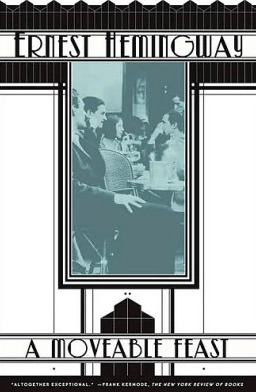
A Moveable Feast – Ernest Hemingway, 1964 ★★★★

Dining on the Past

Memory, like other intoxicants, has the power to delight, captivate, and leave a certain melancholy after the thrill goes away. That not-original notion came over me several times when reading A Moveable Feast, a collection of memories held dear by a famously unsentimental writer.

It must be said up front that of all Ernest Hemingway’s books, A Moveable Feast might be his most straight-up enjoyable. It combines his terse, declamatory style with a vibrant and at times colorful account of what it was like to live in Paris a century ago, when so much of our culture’s modern age was being formed.

Like In Our Time one of Hemingway’s most novelistic non-novels, A Moveable Feast’s narrative comes in the form of vignettes, each presenting a different aspect of the author’s time in Paris as a young writer. The end result is like popcorn to the Papa fan:

Saturday, March 12, 2022

This Side Of Paradise – F. Scott Fitzgerald, 1920 ★★

Chasing Girls and Glory

“I don’t know how to run a newspaper, Mr. Thatcher, I just try everything I can think of.”

I kept flashing on this classic line from Orson Welles’s Citizen Kane reading this debut of another young man eager to make his mark. This Side Of Paradise is someone trying everything he can think of.

F. Scott Fitzgerald’s novel runs the gamut from the meaning of life to capitalism. Snappy phrases and clever barbs are in ready supply, as are finely-drawn settings so sumptuous you feel enveloped by them. Yet very much unlike Citizen Kane, there is an overall unpleasant, chaotic feeling about this debut, a preening eagerness to impress by trying to do too much too soon, rather than settle on telling a story.

Sunday, March 22, 2020

Babylon Revisited And Other Stories – F. Scott Fitzgerald, 1960 ★★★★½

Going Long on Selling Short

Can one make the same basic point without becoming shrill or droning?

The answer is yes, if one is F. Scott Fitzgerald and the subject the hollowness of wealth. The best-known collection of Fitzgerald’s short fiction, Babylon Revisited And Other Stories, amazes and engages while beating its one-eyed message like a tom-tom.

The ten stories that make up this collection originally appeared in magazines between 1920-1937. From the first, “The Ice Palace,” to the last, “The Long Way Out,” these varied tales of lost youth and romantic disappointment are all filtered through the prism of wealth and privilege.