Showing posts with label biography. Show all posts

Saturday, January 3, 2026

Mr. Clemens And Mark Twain – Justin Kaplan, 1966 ★★★½

Balancing a Man and a Myth

The central thesis of this critical biography is a tricky one laid out in its title, that being the dual identity of its celebrated subject. As author Justin Kaplan explains it, there were always two sides when dealing with Mark Twain.

He was an avowed atheist who took part in seances and embraced Christian Science, a celebrated voice of the South who lived in Connecticut, a critic of business who eagerly embraced the Industrial Age, a consummate insider who could never resist mocking authority.

“He wanted to belong, but he also wanted to laugh from the outside,” is how Kaplan puts it.

Friday, August 8, 2025

Willie Mays: The Life The Legend – James S. Hirsch, 2010 ★★★

Celebrating a Quiet Giant

In baseball, statistics are the ultimate measure of achievement, yet they fail to do justice to one of the game’s greatest legends. Willie Mays holds no major career records which jump to mind. In areas like stolen bases or home runs, his totals, while impressive, did not dominate even in his own time, let alone looking back now.

Yet when considering the totality of the game, and all the players who ever played it, Mays stands apart like a colossus.

In Willie Mays: The Life The Legend, James S. Hirsch asks the question: “Was he better than the Babe?” Even if you sense he would like to say yes, he doesn’t. Babe Ruth changed the game with his home runs, and that after establishing himself as a champion left-handed pitcher. But Hirsch makes a strong case for Mays anyway.

Saturday, May 24, 2025

Rossetti: His Life And Works – Evelyn Waugh, 1928 ★★½

Making a Splash

In his own lifetime, Evelyn Waugh tells us, Dante Gabriel Rossetti was “the bogey of many Victorian drawing-rooms,” scandalizing society with his splashy, vibrant paintings. Few then were ready to appreciate a true romantic who brought a new way of thinking about art and life.

His Pre-Raphaelite Brotherhood of artists blended hyper-realistic detail with medieval-inspired treatments, resulting in a highly individualized style which remains unique and widely admired. While often messy when came to personal matters like money and women, Rossetti was the right artist to challenge a stale period for British culture.

Waugh found this still true nearly a half-century after Rossetti’s death: “By no means the least of the advantages to be gained from a study of Rossetti is the stimulus it gives to one’s restiveness in an era of competent stultification,” he writes.

Thursday, March 27, 2025

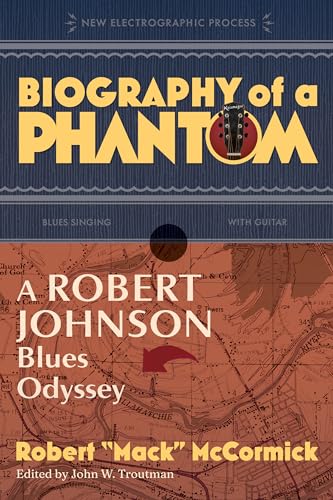
Biography Of A Phantom: A Robert Johnson Blues Odyssey – Robert “Mack” McCormick, 2023 ★½

On A Guitar God's Tortuous Trail

As the years pile on, true knowledge about a dead legend often melts irretrievably into the realm of myth. If that legend toiled in relative obscurity while alive, the chance for objectivity gets thinner.

Whatever one can say about the merits or intentions of blues scholar Robert “Mack” McCormick, his posthumous account of the life of Robert Johnson makes this clear, for the author and subject.

In the early 1970s, McCormick set out to find the real Johnson by using the living memories of friends and family. In the process, he wound up creating Rashomons of both subject and himself.

Whether you see Mack as a heroic researcher or a greedy exploiter may depend as much on you as on him.

Saturday, February 22, 2025

Stilwell And The American Experience In China 1911-1945 – Barbara Tuchman, 1971 ★★½

Anatomy of a Misadventure

A book about historic failure needs a deft hand to keep from being more than a drag for a reader, especially when the topic is the Allied effort in World War II. During the march to final victory, who wants to dwell on an endless spiral of ignominy going on in China?

Stilwell And The American Experience In China is not easy to ignore. It was a history of great occasion when it came out, a Pulitzer Prize-winning examination of American policy in the Far East. This came out at a time when young men were being shipped home from Vietnam in body bags by the hundreds every month.

That the book would be seen as all-too-relevant to the politics of the 1970s was not something author Barbara Tuchman avoids. She makes her feelings clear enough in the book’s Foreword:

Saturday, September 28, 2024

The Twelve Caesars – Suetonius, c. 121 ★★★★★

When Bias Isn't Such a Bad Thing

Can a biased historical account be preferred over one that is more even-handed? It’s not an easy ethical question, but in terms of invigorating a reader with the spirit of a lost time, not to mention crafting a deep-dish narrative that pulls you in, the answer can be yes.

That’s even more true if the writer is Suetonius, and the work this account of the early rulers of the Roman empire.

Sharp character sketches and piquant social commentary make the First Century A. D. come alive in a way that makes you believe you are really half-back in time, reluctant to realize much of what he was writing was tabloid journalism for the stylus age. Not fiction, but likely blown well out of proportion for the sake of readability and old grudges.

So what!

Sunday, August 18, 2024

Nathaniel Hawthorne: A Critical Biography – Mark Van Doren, 1949 ★★★

An Imperfect Greatness

How to rank Nathaniel Hawthorne among the literary giants? He did so much to give serious fiction a uniquely American idiom and character. Yet how many Hawthorne masterpieces are there?

As Mark Van Doren sees it, there are just two. One is widely regarded as the first great American novel. The other, a short story, is just as powerful in the myriad ways it details the evilness of the human heart. Both are majestic, but after that, Hawthorne too often suffered from a willingness to err on the side of comfort, both his own and the reader’s.

Does Van Doren’s minimalist appreciation convince? I don’t think he even tries that hard. But he does offer a bracing way to consider Hawthorne’s deceptively genial legacy from a perspective of eighty years on, a legacy just as bracing eighty years after that.

Saturday, August 10, 2024

Paul Revere’s Ride – David Hackett Fischer, 1994 ★★★½

Some Kind of Hero

Who is this Paul Revere guy and what do we really need to know about him? Is he just a one-hit wonder in American history who transformed an abbreviated horse ride into a ticket to immortality? Or was he actually great?

David Hackett Fischer’s short answer: Yes, he was. The longer answer is this nearly 400-page dive examining his life, world, and central role in helping set the stage for the American Revolution.

Fischer is successful in the main drawing attention to Revere’s personal courage and deeper contributions to his cause, but like with his other histories, the book really shines at taking a broader view. A lot more planning went into April 19, 1775 than how many lanterns to put in a steeple.

Monday, January 1, 2024

Casey: The Life And Legend Of Charles Dillon Stengel – Joseph Durso, 1967 ★★

A Winning Personality

The only man in baseball to have had his uniform number retired by both the New York Mets and the New York Yankees, Casey Stengel won those honors for entirely different reasons.

For the Yankees, he managed a team to an unmatched five straight World Series Championship seasons, and notched two more World Series wins and three further appearances in just 12 years. For the Mets, he diverted attention from epically bad baseball with a unique gift of gab and invigorating showmanship.

That the Mets retired #37 four years before the Yankees seems appropriate. Stengel’s personality often overshadowed his performance. You sense this reading Joseph Durso’s biography of the man, which was published between those two events and commemorating Stengel’s induction in baseball’s Hall of Fame as a case of winning personality.

Sunday, September 10, 2023

One Of Us: Richard Nixon And The American Dream – Tom Wicker, 1991 ★★★

Tricky Dick and His Critics

Presidents are not well-balanced people. They go out of their way risking derision, abuse, even murder to affect miniscule changes in how things are; at best making compromises, at worst committing crimes. Such an impulse must be questioned; either they are corrupt or insane.

Few presidents wore that derangement so openly as Richard Nixon, a childhood misfit who ran for national office five times and looked more miserable and awkward each time at it. In a business that demands compulsive socializing, he was a proud loner who cultivated many strategic allies but very few friends.

Yet he made himself the most consequential president of the second half of the 20th century, an era which gave us several.

Friday, February 24, 2023

Tune In: The Beatles – All These Years, Vol. 1 – Mark Lewisohn, 2013 ★★★★

Waiting for Ringo

The truly fab thing about this book is how close Mark Lewisohn makes you feel to the Beatles, not as a musical legacy or cultural institution, but human beings you get to know better than just about anyone you will ever meet.

Yet it keeps reminding me of that old maxim: never meet your heroes.

To put it plainly, these guys played rough pushing their way to “the toppermost of the poppermost.” Most people picking this book up will know the sad tale of Pete Best, but many others were used and discarded for much less cause. “The Beatles weren’t sentimental types,” Lewisohn writes, in his typically understated way.

Saturday, October 22, 2022

Bob And Ray: Keener Than Most Persons – David Pollack, 2013 ★★★

Two for the Show

These days, surrealism is well-established as a basis for comedy. You don’t even have to get laughs if you can twist what passes for reality in a uniquely enjoyable way. It wasn’t always so.

In the 1940s and 1950s, comedic premises were fairly square and straightforward. People did jokes and sketches and then played music or sold war bonds or whatever. There were cartoons and the Three Stooges, but those were widely seen as being for kids.

Then in 1946, two announcers found themselves on the radio together in Boston, Massachusetts, and American comedy began to change.

Wednesday, August 3, 2022

Harry Hooper: An American Baseball Life – Paul J. Zingg, 1993 ★★

Shout Out to a Forgotten Legend

Baseball stars flash across the sky so quickly you often not only miss them, but never know they were there. Take Harry Hooper.

A key piece of four World Championship teams when he played for the Boston Red Sox, Hooper was still overshadowed by two other outfielders. Master of the sliding catch and stealing bases, he still holds the record for the most assists at his position yet statistically falls a bit short of the greats of his era. Everyone admired him, but despite his smarts he got passed over for manager jobs after retiring.

Paul J. Zingg asks some questions about why Hooper is so obscure among the players enshrined in baseball’s Hall of Fame, and unknowingly provides answers, too. Hooper had a stellar career, alright, but he also makes for dull copy.

Saturday, March 5, 2022

George B. McClellan: The Young Napoleon – Stephen W. Sears, 1988 ★★½

General Delay

Terrible military leaders grab history’s attention like a car wreck on the highway, albeit with a much higher body count. Whether as monuments of supreme idiocy or just poor luck, they live on in a way only the best of the good leaders do.

Think of Custer or Crassus or Conrad von Hötzendorf, who all married bad judgment and wanton disregard for life to leave us eternal reminders of the folly of war. There are others not as spectacular but every bit as deadly.

Take, for example, George McClellan, whose leadership can be blamed for extending the U. S. Civil War. This at least is the impression left by Stephen W. Sears in this biography of McClellan.

Saturday, January 15, 2022

Edmund Campion: A Life – Evelyn Waugh, 1935 ★★½

A Saint in Shackles

Evelyn Waugh doesn’t exactly exude humble piety. His fiction sneers with acid contempt at the foibles of his fellow man. So a serious, earnest, ever-so-respectful biography from this famous cynic about a saint martyred over 350 years before is a bit of a detour.

Waugh was Catholic; it is part of his legend. But mostly his faith is a matter of being against things: modern architecture, sex outside marriage, loud parties, and so on. Edmund Campion: A Life is a rare occasion for seeing Waugh putting forward faith as positive action.

As a book, it is minor Waugh. But as a glimpse at what made Waugh tick, Edmund Campion engages and reveals between its lulls.

Monday, January 3, 2022

The Years Of Lyndon Johnson: The Passage Of Power – Robert A. Caro, 2012 ★★★★

Free at Last

It is amazing how each of Robert Caro’s four (so far) books on the presidency of Lyndon Johnson manages to create its own distinct identity, interlinked to the others yet separate.

In The Passage Of Power, LBJ’s story finally moves to the White House, where he is trapped for years as forlorn vice president playing stooge to the man who beat him for the Democrat nomination in 1960, only to win the office he craved for so long as the result of an assassin’s bullet and then do things with that office that would amaze detractors and allies alike.

Passage isn’t perfect, but it’s a fascinating, detailed account of and about flawed greatness.

Thursday, December 9, 2021

Babe: The Legend Comes To Life – Robert W. Creamer, 1974 ★★★

Too Much Perspective

Visiting his home turf of Yankee Stadium for what proved his last time, on Opening Day 1947, a cancer-stricken Babe Ruth rasped out what seems in retrospect a bittersweet epitaph on his singular life:

“The only real game in the world, I think, is baseball.”

By then, Ruth’s life had become a shell of what it was, both from the disease slowly killing him and his exile from the game that gave his life its meaning, purpose, and glory. Robert Creamer’s 1974 biography puts in all in perspective. Or as Spinal Tap’s David St. Hubbins once put it, as he beheld the grave of another idol, “too much bleedin’ perspective.”

Saturday, November 20, 2021

The Years Of Lyndon Johnson: Master Of The Senate – Robert A. Caro, 2002 ★★★★

Breaking a Few Eggs

The more I read about Lyndon Johnson, the more I see how much one can do if heedless of needs for self-reflection, sleep, or a real friend.

Even as Robert A. Caro offers up some admiration for the man who would become the 37th President of the United States, as Johnson aligns himself to causes Caro holds dear, the author does not try to sugarcoat the fact LBJ was first and last a deeply-unpleasant SOB.

Saturday, September 25, 2021

The Years Of Lyndon Johnson: Means Of Ascent – Robert A. Caro, 1990 ★★★½

Snatching the Middle Rung

Means Of Ascent begins as a high-spirited adventure tale of a risk-taking politician gutting through a deadly illness and campaigning from an early-model helicopter. It ends as a whodunit, complete with menacing gunmen and courtroom misdirection ploys.

What connects the two parts is Lyndon Johnson, an 11-year member of the U. S. House of Representatives desperate to be where the action is in American politics – the Senate – and willing to do anything to get there.

Saturday, August 14, 2021

The Years Of Lyndon Johnson: The Path To Power – Robert A. Caro, 1982 ★★★★★

Seeming a Saint While Playing the Devil

When it comes to DNA analysis, Robert A. Caro was way ahead of the field in 1982 when he identified a specific human genome for ruthlessness and dubbed it “the Bunton strain.”

A line of legendarily cold and selfish Texans, the Bunton family left a mark on their lineal descendent Lyndon Baines Johnson. Along with the unforgivingly harsh environment of the Lone Star State’s Hill Country, the Bunton strain formed LBJ in Caro’s telling to become one of the nastiest SOBs ever to win his nation’s highest office.