Showing posts with label travel. Show all posts

Saturday, August 29, 2026

Under Kilimanjaro – Ernest Hemingway, 2005 ★★★★

Iceberg Turned Upside-down

Like many others, my Ernest Hemingway studies began with a teacher in front of a blackboard with an iceberg drawn on it.

“Notice with the water level we only see the tip of the iceberg,” he said. “That’s what Hemingway did with his writing. There is so much underneath he doesn’t explain, but you know it’s there. All you get is the basic plot and some character dialogue. The reader must fill in the rest.”

With Under Kilimanjaro, that concept is literally turned upside down. In its 445 pages, what you get is pretty much everything Hemingway experienced on his second safari in Africa except a plot. There are multiple story arcs, but no clear single throughline. It’s kind of a mess, yet more fun than several of Papa’s more disciplined works.

Saturday, July 25, 2026

Robbery Under Law: The Mexican Object-Lesson – Evelyn Waugh, 1939 ★★

Taking Oil, Dumping God

Marxism is one of the most profound political movements in the history of mankind. Love it or hate it, the rise of the “workers’ revolution” has left few neutral observers in its wake.

Evelyn Waugh was one of the haters. He condemned Marxism for its negative impact on national economies, its removal of public liberties to serve a nebulous public good, and most especially its avowed atheism. In Mexico in the late 1930s, he called out this “object-lesson” for what he describes as its ruinous effects.

Waugh writes: “Just as the United States earned the gratitude of the world by ‘trying out’ prohibition, so the Mexicans may be said to be trying out Marxism.”

Saturday, May 16, 2026

Green Hills Of Africa – Ernest Hemingway, 1935 ★★½

The Hangover Strikes

The 1920s gave us Hemingway’s legacy, the 1930s left us the legend. Green Hills Of Africa is how that legend is often remembered, opinionated, self-glorifying, often a mean drunk toting a loaded gun.

How much you enjoy this travel/hunting memoir depends on your tolerance for its brilliant but often solipsistic prose. Sure, there are quotes aplenty, but also a reason for seeing in it the beginning of serious decline.

For one thing, the man was letting himself go:

Sunday, March 22, 2026

Waugh In Abyssinia – Evelyn Waugh, 1936 ★★

Hooray for Fascism

Evelyn Waugh’s most famous travel book is celebrated more than it is actually read, a good thing for the writer’s reputation as actually reading Waugh In Abyssinia exposes his worst traits: indifference to human suffering, a tendency to boredom, and a badly blinkered mindset.

It’s not only how he comes out strongly in favor of the Italian occupation of the land known today as Ethiopia, but the bland, superficial way he makes his points. As fascist apologia, it’s rather wan.

Reading it today does sting, as he justifies Mussolini’s broadly condemned 1935 invasion as the natural result of Abyssinian truculence and lassitude. Waugh exposes here a disdain for non-European people he did better to conceal in other writings, even if his main target is the European liberal elite who condemned the invasion after their own countries enriched themselves the same way decades before.

Saturday, December 13, 2025

Ninety-Two Days – Evelyn Waugh, 1934 ★★★½

Postcards from the Edge

Evelyn Waugh’s travel writings offer such a litany of complaint that by his third expedition one suspects he was just in it for the grousing. But despite a characteristic whinging tone, Ninety-Two Days evolves into a delightful if somewhat broody trudge through the tropics. Waugh’s gift for word portraiture was never better.

The lands being visited here were the most distant yet for Waugh, the colony of British Guiana and a vast neighboring section of northern Brazil. Hot weather, bad roads, awful food, leaky roofs, frenzied insects, and an ever-present sense of torpor were just some of the tortures Waugh endured for his readers.

He is not shy about his suffering. “There are a hundred excellent reasons for rough travelling, but good living is not one of them,” he writes.

Saturday, August 30, 2025

Remote People – Evelyn Waugh, 1931 ★★★

Ramblings of a Homesick Traveler

Early on, Evelyn Waugh’s travel notes did double duty providing material for novels while also sourcing his journalism. For that reason, his travelogues often feel like afterthoughts.

For lauded travel writers like Paul Theroux or William Least Heat-Moon, the book is the focus. However brilliant at dishing and dunking as Waugh was, his road accounts often feel unformed by comparison.

In Remote People, the World of Waugh is an exciting, amusing, often cantankerous place to explore. Still, at the end of the day the only road that matters may as well be the one that takes you back home.

Thursday, March 27, 2025

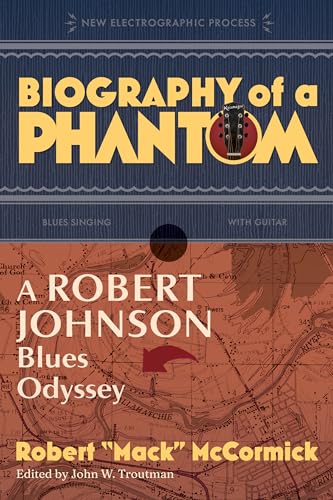
Biography Of A Phantom: A Robert Johnson Blues Odyssey – Robert “Mack” McCormick, 2023 ★½

On A Guitar God's Tortuous Trail

As the years pile on, true knowledge about a dead legend often melts irretrievably into the realm of myth. If that legend toiled in relative obscurity while alive, the chance for objectivity gets thinner.

Whatever one can say about the merits or intentions of blues scholar Robert “Mack” McCormick, his posthumous account of the life of Robert Johnson makes this clear, for the author and subject.

In the early 1970s, McCormick set out to find the real Johnson by using the living memories of friends and family. In the process, he wound up creating Rashomons of both subject and himself.

Whether you see Mack as a heroic researcher or a greedy exploiter may depend as much on you as on him.

Saturday, March 1, 2025

Labels: A Mediterranean Journal – Evelyn Waugh, 1930 ★★★

Journey of a Misspent Wife

While still a young man, Evelyn Waugh struck upon his method for success: it pays not only to be witty when writing, but shocking, too.

That Waugh was, not right away, but early out of the gate. Part of a celebrated circle of upper-class wastrels known as “the Bright Young Things,” he was recognized while still a student for his talent and rapier wit. After launching himself with a ruthless satire about British society, Decline And Fall, that offended many and made his name, he was left with the problem of what to do next.

His answer: Mock the rest of Europe by way of a travel book.

Sunday, June 23, 2024

The Marble Faun – Nathaniel Hawthorne, 1860 ★★

Mixing Life and Art in the Eternal City

The final novel by the first great American novelist has so much going for it in isolated moments that its undeniable dreadfulness as a whole winds up a thing of wonder.

Imagine a book so filled with magnificent vistas that one feels flush from the radiance of summer mornings that came and went 150 years ago. Imagine lengthy dialogues between a religious believer and a skeptic which genuinely respects the substance of both viewpoints. Imagine social and artistic discursions touching upon centuries of Western civilization.

Then imagine all this being secondary to a plot about whether a man has furry, pointy ears; how a glance can constitute complicity in a murder; and why two bland couples can somehow never find happiness together.

Saturday, June 8, 2024

The Dangerous Summer – Ernest Hemingway, 1985 ★★

A Farewell to Death

Ernest Hemingway died in 1961 but that didn’t stop him pumping out product for the next 50 years. Only Jimi Hendrix’s estate was busier. In 1985-1986, Hemingway fans had three new books to choose from, a novel, a collection of early articles, and a late-in-life memoir.

Imagine how thrilling it must have been to learn the memoir detailed Hemingway’s rediscovery of bullfighting and the land which spawned it, Spain? Together, these are key ingredients in two of Papa’s most beloved works, The Sun Also Rises and Death In The Afternoon. What could possibly be wrong?

Nothing, so long as the reader doesn’t expect the same kind of transportive experience. The Dangerous Summer mostly delivers the goods, a summer highlighted by a pair of brilliant matadors. It manages to be straightforward, amusing, piquant, and somewhat dull.

Sunday, October 8, 2023

Death In The Afternoon – Ernest Hemingway, 1932 ★★★★

Baedeker of Blood

Imagine the life of a Spanish bullfighter, circa 1931. You risk life and limb in an era before modern medicine can treat your worst injuries or video can immortalize your finest kills. There’s a depression on, civil war looming and a fanbase that tends to throw things at you when annoyed.

Now add to all this pain some know-it-all American who wants to immortalize you by calling the world’s attentions on your shabby technique in the ring, your homely face, and even your lack of courage at doing something no sane person would try.

Sunday, September 4, 2022

Iberia: Spanish Travels And Reflections – James A. Michener, 1968 ★★★★½

Stuffing an Entire Nation into One Big Book

James Michener was known for producing doorstopper tomes, phone-book sized novels that spanned decades and generations while taxing reader attention spans to the limit. But sometimes bigness is a virtue, as with this memoir of his travels around Spain.

Spain may get ignored by many, including me, when considering the sweep of Western civilization. Then I think on this: In 1966, while Michener was in Spain gathering material for this delightful book, Sergio Leone was there directing The Good, The Bad, And The Ugly and John Lennon was there writing “Strawberry Fields Forever.”

Saturday, May 28, 2022

Blue Highways – William Least Heat-Moon, 1982 ★★★★★

America Off the Beaten Path

What makes America? In 1978 a laid-off teacher of Anglo-Sioux ancestry drove across the United States to discover a land that reflected the dynamic, sometimes schizoid, multiplicity of its people.

Named after the secondary highways so-marked on road maps, Blue Highways details the state-by-state experiences of the newly separated and unemployed teacher William Least Heat-Moon. He freely admits he had no clear reason for starting his journey, other than general restlessness. But the book that came from it shows how great things can sometimes come without a clear plan:

A man lives in things and things are moving. He stands apart in such a temporary way it is hardly worth speaking of. If that perception dims egocentrism, that illusion of what man is, then it also enlarges his self, that multiple yet whole part which he has been, will be, is.

Saturday, August 28, 2021

Thrilling Cities – Ian Fleming, 1963 ★★★

Come Fly with Me

Air travel was fairly new in 1959; many still lacked the nerve or the money to go up in a plane. What better way to promote round-the-world adventure than in the company of the man who invented James Bond?

This may be the idea behind this pleasant curiosity and footnote in the career of Ian Fleming, as envisioned first by the editors of the Sunday Times and, years later, the publisher of the Bond thrillers. The title hastens to assure you some really exciting places await you inside.

Do they?

Saturday, September 5, 2020

Sailing Alone Around The World – Joshua Slocum, 1900 ★★★

Playing Solitaire with Neptune

You have to be one tough fellow to sail around the world all by yourself in an age before radio communication, let alone satellite navigation.

Yet it happened for the first time ever on June 27, 1898, when New Englander Joshua Slocum returned to Boston after more than three years circling the globe on his 37-foot-long sloop, the Spray.

Sunday, June 14, 2020

Kon-Tiki – Thor Heyerdahl, 1948 ★★★

Riding the Pacific

In 1947, five Norwegians and a Swede cast themselves 4,300 miles into the world’s largest, stormiest ocean on a raft of wood and hemp to prove a scorned ethnographic theory. Never mind about the theory; their resulting adventure would inspire generations.

For 101 days the Kon-Tiki risked storms, sharks, and ill-advised dingy excursions to make a point. Not about whether ancient Peruvians settled in Polynesia many centuries ago, as Kon-Tiki’s leader Thor Heyerdahl believed, but about the nature of life and man’s place in the world.

Tuesday, January 27, 2015

Into The Wild – Jon Krakauer, 1996 ★★½

Act Naturally

Escaping from civilization is a time-honored fantasy most of us manage to shake off somewhere between the television set and the refrigerator. But for some, the fantasy of chucking it all and living on one's own terms in the Great Outdoors dies harder than for others.

In the case of Christopher McCandless, subject of Jon Krakauer's Into The Wild, it was to prove fatal.

Sunday, September 28, 2014

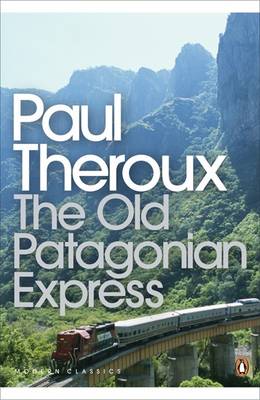
The Old Patagonian Express – Paul Theroux, 1979 ★★★★


Rolling and Grumbling

For one of the most recognized travel writers ever, Paul Theroux doesn't seem to go in much for the genre. His 1979 account of riding the rails all the way from Medford, Massachusetts to Esquel, Argentina is loaded with disdain for travel-writings conventions and expected pieties.

"The literature of travel has become measly," he tells us close to the beginning. "The joke opening, that straining for effect, is now so familiar it is nearly impossible to parody...What interests me is the waking in the morning, the progress from the familiar to the slightly odd, to the rather strange, to the totally foreign, and finally to the outlandish. The journey, not the arrival, matters; the voyage, not the landing."