Showing posts with label comic book. Show all posts

Sunday, June 25, 2023

Asterix And Cleopatra – René Goscinny & Albert Uderzo, 1965 ★★★★

One for the Ages

Many classic serials have early peak moments, single entries that make their claim for greatness and set a bar for all future installments.

Consider that hallmark of American culture, the sitcom. There is always that one episode people point to, like Seinfeld’s “The Contest,” Community’s “Modern Warfare,” or for us older folk, M*A*S*H’s “Sometimes You Hear The Bullet.” Fans know them well. Some argue their primacy, but not their place in the pantheon.

The same goes for bandes dessinées, or Franco-Belgian comic books. With Asterix, the first great book to call out is fairly clear. It’s this one, six books into the series, which not only made its mark as a favorite back when it came out, but set the tone for all that followed.

After all these years, it must be said, Asterix And Cleopatra is still fun.

Sunday, January 8, 2023

Asterix And The Banquet – René Goscinny & Albert Uderzo, 1965 ★★

Lost in Translation

The appeal of Asterix comics is universal, yet the humor can often be highly specific to a particular time and place. Such is the case with this gorgeous and charming but scattershot send-up of regional cuisine and the Tour de France.

The puns are worse than usual, the story is a mess, and a lack of tension exposes the flabby narrative. But Albert Uderzo’s art keeps getting richer and more vibrant with every change in scenery, while René Goscinny’s joyful spirit goes a long way toward getting a reader to look past his slimmer-than-usual ideas.

Plus you get the arrival of a major character in Dogmatix, the compact but courageous canine who will keep Asterix and Obelix company from here on out. Dogmatix doesn’t actually do much in this book  but no one else does, either.

Saturday, May 7, 2022

Asterix In Switzerland – René Goscinny & Albert Uderzo, 1970 ★★

A Flower for Caesar

Moving into its second full decade, the Asterix series had settled into not one but two formulas: adventure spoofs and travelogues. Asterix In Switzerland employs the latter as it veers between mild fun and meh.

Goscinny and Uderzo deliver this tale of our favorite Gaulish rebels with a strange twist: instead of frustrating the efforts of their arch-enemy Julius Caesar, Asterix and his buddy Obelix must save Caesar’s auditor Vexatius Sinusistus from poisoning by a corrupt governor.

Saturday, October 30, 2021

Asterix The Gladiator – René Goscinny & Albert Uderzo, 1964 ★★★★

Rome is Where the Heart is

Seeing a classic comedy series hit all cylinders for the first time is a sublime feeling. You may know all the jokes and slapstick gags, but seeing all the ingredients blending in the right proportions tickles more than the funny bone. It does the heart good, too.

Asterix The Gladiator is where it all comes together for the “Asterix” French comic- book series. Art, dialogue, premise, resolution, side characters, sly parodies and goofy pratfalls: it all just flows from Goscinny & Uderzo like they have been doing this sort of thing for years.

And they had, too. Just not this well.

Monday, May 24, 2021

Asterix And The Goths – René Goscinny & Albert Uderzo, 1963 ★★

Taking It on the Road

After keeping it French for the first two Asterix adventures, creators Goscinny and Uderzo took their heroes out of the country for the first of many times in this third installment of the series. This time the destination is Germany.

How did it work? Okay, I guess. You get another dose of the humor and visual splendor that still captivate young and old, including me. The story is a soft one, but it did set a successful template for the series it would return to again and again, of visiting a foreign land and having fun with its customs and culture.

Saturday, September 19, 2020

Tintin And Alph-Art – Hergé, 1986/2007 ★½

Dining on Table Scraps

A chance to rifle through the waste basket of a favorite artist sure sounds fun; is it? The publication of a so-called “24th volume” in the legendary Tintin comic-book series gave fans a chance to find out.

The year was 1986. The man behind Tintin, the great Hergé, had been dead three years. But he left behind some sketches and long sections of dialogue for a new Tintin book. By most surviving indicators, it would have been a very different one from what fans were used to.

Having battled pirates, smugglers, and generals, Tintin would face the challenge of the “Alph-Art.” Would it prove his final undoing?

Sunday, August 23, 2020

Asterix And The Golden Sickle – René Goscinny & Albert Uderzo, 1962 ★★½

Partnering up in Paris

Something is different very early in the second volume in the Asterix The Gaul comic-book series: Asterix is joined for the first time on an adventure by a roly-poly boar-devouring buddy named Obelix.

Even before that, in the very first panel, something else about Asterix And The Golden Sickle stands out: The art. Simply put, it’s amazing, exhilarating in perspective and detail, and consistently amusing. Another partnership came together here, that of writer René Goscinny and illustrator Albert Uderzo, who emerges as the real star of this affair.

Saturday, July 18, 2020

Tintin And The Picaros – Hergé, 1975-76 ★★

Tintin Takes his Time

The last completed Tintin adventure is a minor dud, not terrible but deflating. You do get some of the character-based charm and striking visuals characteristic of prime Tintin. What’s lacking is engagement.

Eight years had passed since the prior album, and with that long gap you sense an author tired of his creation. Hergé still has enough in the tank, though; the finale blends humor and suspense, a Tintin trademark.

Getting there is the problem.

Sunday, June 21, 2020

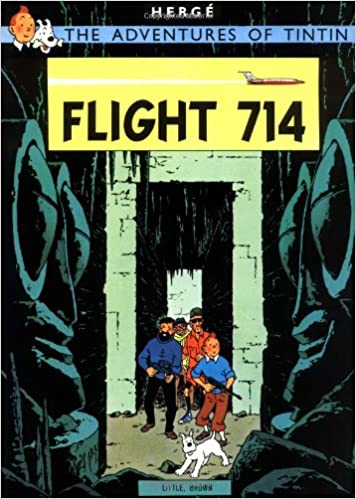
Flight 714 – Hergé, 1966-68 ★

Hergé Don't Want to Play No More

Reading this reminded me of a childhood friend who grew suddenly disaffected by the games we played. Going through the motions with obvious contempt, he made clear what a drag he now found it all to be. That same sorry vibe hangs over this Tintin adventure.

The story has promise, a tropical adventure set in the south Pacific which introduces Laszlo Carreidas, eccentric tycoon whose comical nastiness serves as a recurring plot point. The art is splashy and sometimes even engaging, incorporating Hergé’s signature ligne-claire style with more shading and texture than usual.

But the more stuff happens, the more you realize the author doesn’t care about the book. Playtime is over; Flight 714 is the glum result.

Saturday, May 23, 2020

The Castafiore Emerald – Hergé, 1961-63 ★★

Held Captive by a Nightingale

The joy of a Tintin story often centers less around the story than the surrounding hubbub: goofy introductions, mistaken identities, Captain Haddock’s tantrums, the gags and pratfalls, an ever-shifting plot.

So why not forgo the story and just focus on hubbub? That’s what we get with The Castafiore Emerald: A story without a story.

Does it work? Not really. Certainly it isn’t one for newbies, and it hardly compares to the first-rate adventures of yore. More a mulligan, really.

Saturday, April 18, 2020

Tintin In Tibet – Hergé, 1958-60 ★★★½

On Top of the World with Tintin

I don’t know about you, but when I see Tintin reviews that use terms like “spiritual,” “mature,” and “deeply personal,” I get nervous. I know what I like about Tintin, and those ain’t them.

So I came to Tintin In Tibet with trepidation, not only because it came while author Hergé began losing interest in his towheaded brainchild but also because it has the reputation for being very different from those earlier volumes that entertain me so.

Here’s the thing: Tintin In Tibet is different, yet very enjoyable. And despite what critics say, it’s still Tintin; at times jagged and at other times very efficient, yet consistent in delivering the same joys as yore. So dig in!

Saturday, February 29, 2020

The Red Sea Sharks – Hergé, 1956-1958 ★★★★

Sail Away with Tintin

If I could give a person one Tintin book to explain my love for the series, it would probably be The Black Island. But if pressed which volume best showcases the classic Tintin formula, I might pick this instead.

The classic ingredients are here in force: Active support from Captain Haddock and Snowy, slapstick, intrigue, globetrotting – all held together by a smoothly-functioning engine of a plot. Some supporting players are underrepresented, but to be fair, you won’t find a broader range of recognizable characters in any other Tintin book.

All this, and a total charmer to boot.

Friday, January 17, 2020

The Calculus Affair – Hergé, 1954-1956 ★★

Plate-Spinning Replaces Plotting

Creative juices are an unreliable source of energy. Just when you most expect them to flow, they have a habit of letting you down.

This is my theory of what happened to Hergé when it came time for him to follow his two-part spectacular about Tintin landing on the Moon. He went for the same thing, a blend of theoretical science and engaging fantasy served up with lots of character-based comedy, but this time just winged the plot.

It doesn’t quite work, making The Calculus Affair an adventure where, for all his polish and craft, I felt Hergé running close to empty.

Saturday, November 16, 2019

Explorers On The Moon – Hergé, 1952-1954 ★★★★

Fantasy Becomes Prophesy

The fantastical aspect of Explorers On The Moon is not what Hergé did with his extraterrestrial adventure, but what he didn’t do.

No moon men. No cities hidden beneath lunar craters. No princess kidnapped by green-skinned space pirates from John Carter’s Mars.

No, Hergé plays it straight. The result: more of a mind flip now than some cosmic fairy tale would have been then, as he pretty much nails what a moon flight entails before anyone ever went and did it.

Saturday, November 9, 2019

Destination Moon – Hergé, 1950-1953 ★★★

A Small Step to a Giant Leap

Nobody ever watched Star Wars to see Luke Skywalker fix moisture vaporizers. Nor do they want an entire movie of Clark Kent hunting for phone booths. What to make of a Tintin story that amounts to set-up for a boffo coming attraction?

Destination Moon still works fine. While the story itself is kind of static and anticipatory, the vision and craft of creator Hergé and his growing team of skilled collaborators are on vibrant display. You expect lush visuals and lovely details, and you get those, but something else, too: Real-world verisimilitude in comic form.

Saturday, September 7, 2019

Land Of Black Gold – Hergé, 1939-1940/1948-1950 [Revised 1971] ★★★★

Worth the Wait

How much can you expect from a Tintin book that took five calendar decades to reach us in its final form? Logically not a lot, but logic has a way of being happily ignored in the world of Tintin.

Such is the case for Land Of Black Gold, at least for me.

Sunday, July 28, 2019

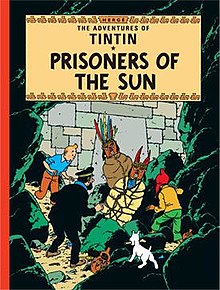
Prisoners Of The Sun – Hergé, 1946-49 ★★

Tintin's Most Overrated Adventure?

Sweeping vistas of the snow-capped Andes. Realistic depictions of ancient Incan architecture and every kind of South American animal you can imagine, from bullish tapirs to ornery llamas. Crypt-like hideaways tucked behind imposing waterfalls.

Prisoners Of The Sun boasts all this splendor and more. Graphically, it is a stepping-up point for “The Adventures Of Tintin” the same way The Blue Lotus had been back when the series was just getting started. Storywise, though, author Hergé is content to put Tintin and his buddies through the motions. That could just be my take, as Prisoners is one of the best-regarded of Tintin books.

Wednesday, July 24, 2019

The Seven Crystal Balls – Hergé, 1943-48 ★★★

Tintin’s Weird Tale

If any installment of the Tintin series had a right to flop, it was this. While author Hergé was writing it, he found himself suddenly unemployed and arrested for Nazi collaboration. Overnight, he went from pop star to criminal. Also, his mother died.

But The Seven Crystal Balls did not flop; just the opposite. It could be argued the book was the best thing to happen not only to “The Adventures Of Tintin” but Franco-Belgian comics; it helped launch a magazine under the “Tintin” banner that became the mothership for a bevy of comic artists and opened a door for Edgar P. Jacobs, a Hergé collaborator who, after his uncredited co-write here, launched his own milestone franchise, “Blake And Mortimer.”

Saturday, June 1, 2019

Red Rackham's Treasure – Hergé, 1943-44 ★★★

Let’s Hear It for the Deaf Man

You’ve spent the last year pursuing bad guys, getting knocked out and kidnapped, escaping, dodging an attack dog, and putting aside whatever it is you supposedly do for a living. Now it’s time to collect your reward: Some old guy who can’t make out a word you say.

At least there’s quality time on a tropical island. Look out for sharks!

Sunday, May 26, 2019

The Secret Of The Unicorn – Hergé, 1942-43 ★★★½

Embarking on a Model Mystery

There is nothing as satisfying as a long-running adventure series settling into full hum. That’s exactly what you get with The Secret Of The Unicorn, 11th installment of “The Adventures Of Tintin.”

Our hero is now completely established in his signature role of adventurer-detective, “a real Sherlock Holmes” as his dog-buddy Snowy dubs him. His new best friend Captain Haddock gets his biggest part yet, a double role in fact.