Showing posts with label American Revolution. Show all posts

Friday, October 2, 2026

John Adams – David McCullough, 2001 ★★★

Looking Out for Number Two

Popular historians need more than get their facts straight; they must entertain while they edify. Few did this better than David McCullough, whose biography on John Adams won him his second Pulitzer Prize. 

Often overlooked for his contributions to the American Revolution and its aftermath, or else depicted as duller or plainer than his fellow Patriots, Adams was due for a reappraisal. But in rebalancing Adams’s legacy as a selfless prime mover of his nation’s birth, did McCullough push too hard in the other direction?

Short answer: Yes. Longer answer: You don’t mind it so much when the case presented – however dubious in several particulars – is this engaging, humorous, and enjoyable to read. Adams at times seems to breathe through these pages.

Sunday, April 6, 2025

Washington’s Crossing – David Hackett Fischer, 2004 ★★★★★

America Rolls the Dice

History books that revel in detail can be turn-offs for casual readers. But not always. Washington’s Crossing transforms footnotes into adventures and academic disagreements into entertaining theater. People say history is fun, but they are rarely proven as right as here.

In the early days of the American Revolution, the war could have gone in any direction. David Hackett Fischer details the travails of the Continental Army in 1776, from its defeat on Long Island to its rebirth in New Jersey as it launches a risky attack across the Delaware River.

Today we may think of 1776 as Year Zero of a grand adventure, a rosy dawn of hope and common purpose, whatever came after. But Fischer points out the contemporary outlook was very glum:

Monday, November 18, 2024

The First Salute – Barbara Tuchman, 1988 ★★½

Helping America Happen

Creating the United States was the work of more than one nation. What commercial and strategic concerns went into its birth? And what really cost the British crown their 13 colonies?

Barbara Tuchman takes a long view in appreciating the forces at play in the struggle, for example spotlighting the Netherlands’ bloody overthrow of Catholic rule in the 1500s. Subtitled “A View of the American Revolution,” the book explains how French and Dutch support, along with British ineptitude, helped realize the United States.

If you can tolerate the hopping-around approach to developing a thesis and multiple detours into 20th century politics, you may enjoy this colorful, fast-moving-once-it-gets-going account.

Saturday, August 10, 2024

Paul Revere’s Ride – David Hackett Fischer, 1994 ★★★½

Some Kind of Hero

Who is this Paul Revere guy and what do we really need to know about him? Is he just a one-hit wonder in American history who transformed an abbreviated horse ride into a ticket to immortality? Or was he actually great?

David Hackett Fischer’s short answer: Yes, he was. The longer answer is this nearly 400-page dive examining his life, world, and central role in helping set the stage for the American Revolution.

Fischer is successful in the main drawing attention to Revere’s personal courage and deeper contributions to his cause, but like with his other histories, the book really shines at taking a broader view. A lot more planning went into April 19, 1775 than how many lanterns to put in a steeple.

Saturday, June 3, 2017

Alexander Hamilton – Ron Chernow, 2004 ★★★★

Celebrating America's Own Alexander the Great

Dying on the battlefield was a fate avoided by the major figures of the American Revolution, unless you extend that battlefield to one of ideals. That was my core takeaway reading Ron Chernow’s bestselling biography on Alexander Hamilton, who survived the war only to die in a brave, bizarre duel over political differences 21 years later.

There’s a book idea out there, perhaps already written, about how the Founding Fathers have been variously remembered and set against each other over time. Some eras were more inclined to celebrate Thomas Jefferson as the consummate democrat. Others placed George Washington on the highest pedestal as a selfless leader. Recently, there was a run on John Adams as misunderstood genius.

Saturday, April 29, 2017

The Bastard – John Jakes, 1974 ★★★½

Come for the Sex, Stay for the Revolution

Sex sells. That’s an idea as old as history itself. Sex sells even when the subject is history, as John Jakes amply demonstrated with the release of this, the first of eight lusty novels tracing the history of an American family spreading their seed from just before the American Revolution to the dawn of the 20th century.

It sure worked for me as a sexually curious 11-year-old when The Bastard 
first came into my ken, not as a novel but as a miniseries on syndicated television. Among its stars was the fresh and lovely Kim Cattrall and that icon of horny 1970s boys, Olivia Hussey, who memorably appeared semi-nude in a popular film adaptation of Romeo & Juliet sometimes screened at school.

In “The Bastard,” the two engaged in a battle of plunging necklines and flashing thighs over the title protagonist, one Philippe Charboneau.

Wednesday, October 19, 2016

Cincinnatus: George Washington & The Enlightenment – Garry Wills, 1984 ★★

Image result for Cincinnatus Garry Wills
Unlocking the Washington Code

Do you know the many Classical allusions buried within artistic representations of George Washington? Are you interested in why Washington stands with his right (not left) arm outstretched in Gilbert Stuart’s famous portrait, and what it says regarding how he was viewed by those he led?

Garry Wills lays out the meaning behind the iconography of our foremost Founding Father, in this hopping, learned, rambling analysis.

Thursday, June 30, 2016

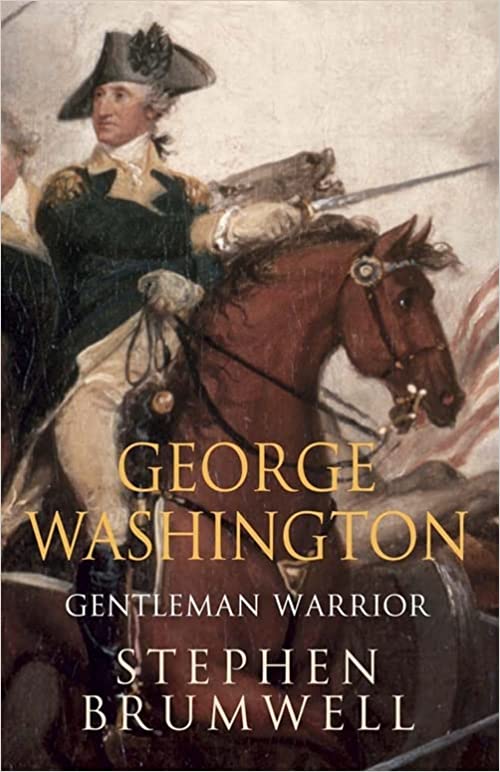
George Washington: Gentleman Warrior – Stephen Brumwell, 2012 ★★

Same Old George

Some write straightforward biographies of George Washington; others thesis-driven ruminations about his deeper meaning or presumed psychological makeup. Then there is Stephen Brumwell, who splits the difference and still misses the mark.

While George Washington: Gentleman Warrior does have a thesis, it's hardly original or revealing. That Washington was a product of his times, a social striver with a strong sense of honor and a focus on proving his self-worth in battle, isn't much of a leap from the established picture.

Perhaps recognizing this, Brumwell uses his thesis less as a springboard than backdrop for a conventional account of Washington's career, albeit one focused entirely on his time as a soldier. Hence the subtitle. If you want Washington the president or hemp farmer, go elsewhere.