Sunday, August 28, 2016

The Story Of Henri Tod – William F. Buckley, Jr., 1984 ★½

Why Spy Fiction Should Be Left to the Professionals

Throughout the 1980s, while helming American conservativism’s flagship journal, National Review, William F. Buckley, Jr. also had going a lucrative and well-regarded side project. It involved CIA agent Blackford Oakes, who gallivanted about the globe dealing with trouble.

This foray into spy fiction offered Buckley a chance to do two things: Emulate Frederick Forsyth, whose Day Of The Jackal Buckley greatly admired; and commentate on his trademark political concerns from a different perch.

As a showcase for Buckley’s wit, and a means of getting his conservative faithful to fork over something more than their annual NR subscription fee, Oakes books seem an inspired stratagem, but how are they for actual reading? Having just finished The Story Of Henri Tod, I can’t say I was much impressed.

Friday, August 19, 2016

Without Feathers – Woody Allen, 1975 ★★★½

Woody the Gag Man, Getting (Somewhat) Serious

Hard to believe, there was a time when Woody Allen could be enjoyed purely as a comic genius. Without Feathers presents him at the zenith of his comedy career, when he was becoming more overtly concerned with what it all meant but not so much that he stopped being playful.

Allen is all over the map in this 1975 collection, most of which first appeared in issues of The New Yorker, Playboy, and The New Republic earlier that decade.

Monday, August 1, 2016

Don't Look Back: Satchel Paige In The Shadows Of Baseball – Mark Ribowsky, 1994 ★★½

Sadder Than It Needed to Be

Did you ever read a biography and decide it was a good read only when it avoided the subject himself? I felt this way reading Mark Ribowsky's 1994 biography of Satchel Paige.

Perhaps the greatest control pitcher of any era, Paige won a lot of games as a barnstorming Negro League veteran and lasted long enough to play a decade in the Major Leagues after the color bar was dropped.

Yet old Satch made his fame truly outsized as much with his mouth. He told great stories and fed the press masterful sound bites that were equal parts whimsy and philosophy. "Don't look back, something might be gaining on you" was a famous one, the first half of which forms the title of Ribowsky's book. Yet a core thesis of this frustrating bio is how little Paige let people in on his real life.

Monday, July 11, 2016

The Daughter Of Time – Josephine Tey, 1951 ★½

Reconstructing Richard

What history got wrong Josephine Tey attempts to make right in this polemic disguised as a police procedural. Your miles may vary, but for me this was a tedious read even when I found worthwhile Tey's arguments regarding the nature of one of Great Britain's most infamous rulers.

Inspector Alan Grant, laid up with a broken leg after pursuing a criminal and stuck staring at the ceiling, kills time by investigating a double murder that occurred nearly 500 years before. Using a number of books at his bedside, as well as the research abilities of an able assistant, he probes the question of Richard III.

Was he really as bad a fellow as history said? What was the real story of his most famous crime, murdering two boys, his crown's rightful heir Prince Edward and his younger brother Duke Richard, in the Tower of London?

Thursday, June 30, 2016

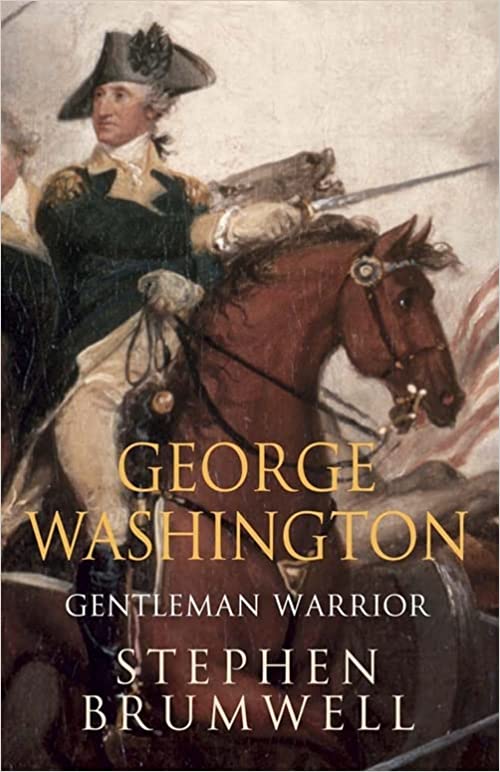
George Washington: Gentleman Warrior – Stephen Brumwell, 2012 ★★

Same Old George

Some write straightforward biographies of George Washington; others thesis-driven ruminations about his deeper meaning or presumed psychological makeup. Then there is Stephen Brumwell, who splits the difference and still misses the mark.

While George Washington: Gentleman Warrior does have a thesis, it's hardly original or revealing. That Washington was a product of his times, a social striver with a strong sense of honor and a focus on proving his self-worth in battle, isn't much of a leap from the established picture.

Perhaps recognizing this, Brumwell uses his thesis less as a springboard than backdrop for a conventional account of Washington's career, albeit one focused entirely on his time as a soldier. Hence the subtitle. If you want Washington the president or hemp farmer, go elsewhere.

Wednesday, June 22, 2016

The Return Of The Native – Thomas Hardy, 1878 ★★

A Character and Setting in Search of a Plot

Every good character in fiction deserves a name as singularly memorable as Eustacia Vye, and a setting as breathtakingly depicted as Egdon Heath.

You know what else is nice to have? An engaging story that doesn't play out like a series of tragic contrivances.

As Thomas Hardy would be the first to remind us, you can't have everything.

Thursday, June 2, 2016

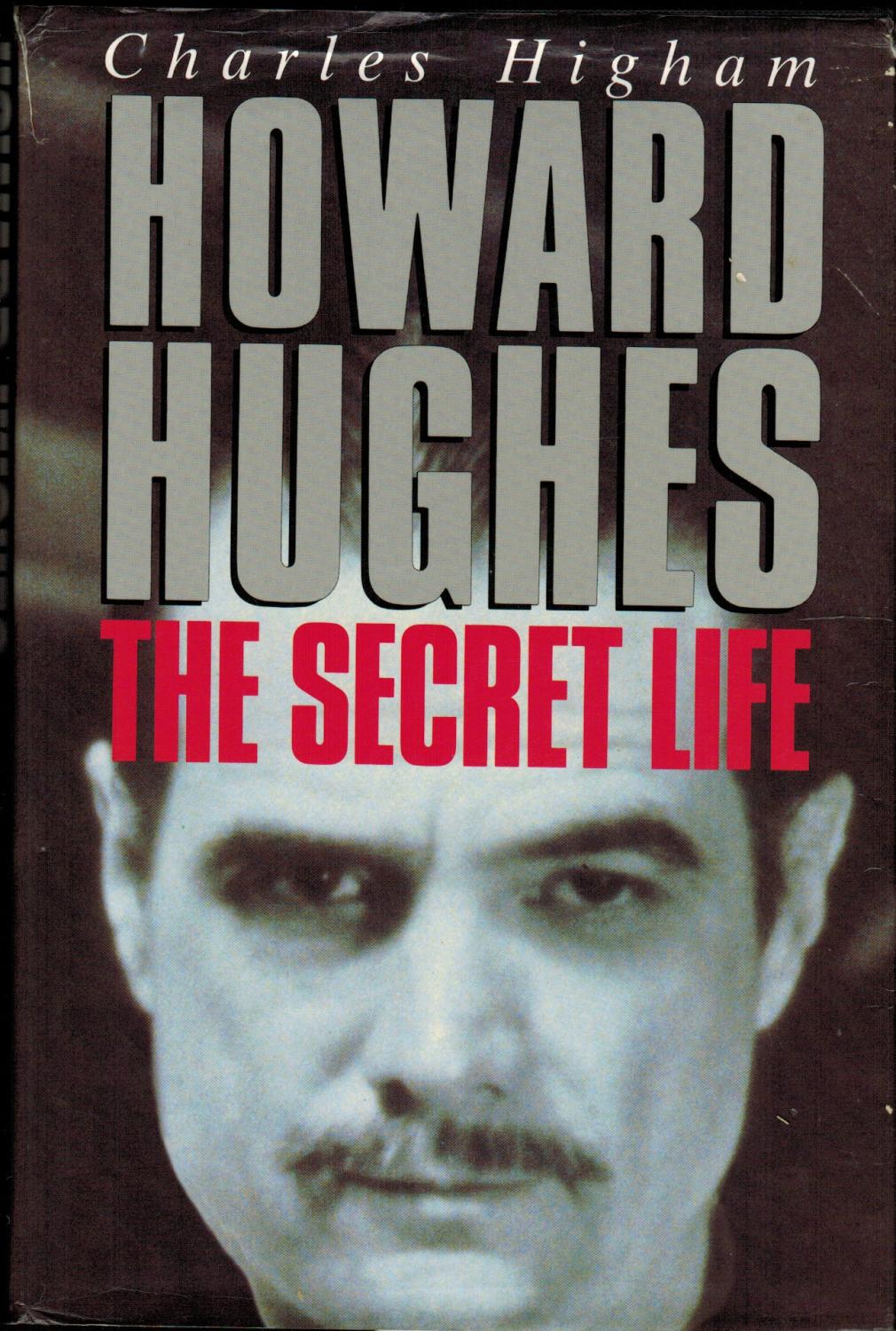
Howard Hughes: The Secret Life – Charles Higham, 1993 [No Stars]

Ain't No Fun Waiting Round to Be a Millionaire

Howard Hughes had a lot of sex in his life. He also flew planes, built businesses, and made some money, but those things didn't matter as much to Charles Higham in 1993 when he published this sleazy and highly speculative bio of the famous 20th-century American tycoon.

Howard Hughes: The Secret Life was the credited source for the 2004 Oscar-nominated film on Hughes, The Aviator, which was directed by Martin Scorcese and starred Leonardo DiCaprio. You remember all those gay sex scenes in The Aviator, like, well, um, come to think of it, I don't either, unless you count the time Jude Law as Errol Flynn plucks a pea off Leo's plate. No, I guess that really doesn't count.

Which goes to show you you can't judge a book by its film adaptation.