Thursday, January 5, 2023

Mr. Lincoln’s Army – Bruce Catton, 1951 ★★★★½

Dying to Learn

Many books about the American Civil War begin with the Battle of Bull Run. Mr. Lincoln’s Army does, too, but not the normal way. It opens with the Second Battle of Bull Run, a contest which settled nothing except the plain fact the Northern Army was being run by idiots.

Ineptitude is a common theme of this first volume of a famous trilogy focused on the Army of the Potomac, specifically its painful struggle to find its feet and strike the decisive blow against the Confederacy.

It was all a question of leadership. “There would have been unqualified disaster if the generals had not been commanding men better than themselves,” Bruce Catton writes.

Sunday, December 25, 2022

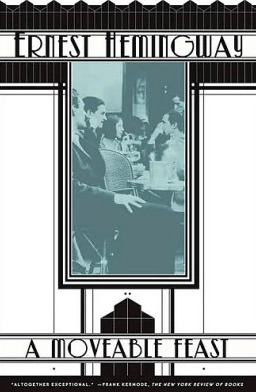
A Moveable Feast – Ernest Hemingway, 1964 ★★★★

Dining on the Past

Memory, like other intoxicants, has the power to delight, captivate, and leave a certain melancholy after the thrill goes away. That not-original notion came over me several times when reading A Moveable Feast, a collection of memories held dear by a famously unsentimental writer.

It must be said up front that of all Ernest Hemingway’s books, A Moveable Feast might be his most straight-up enjoyable. It combines his terse, declamatory style with a vibrant and at times colorful account of what it was like to live in Paris a century ago, when so much of our culture’s modern age was being formed.

Like In Our Time one of Hemingway’s most novelistic non-novels, A Moveable Feast’s narrative comes in the form of vignettes, each presenting a different aspect of the author’s time in Paris as a young writer. The end result is like popcorn to the Papa fan:

Thursday, December 22, 2022

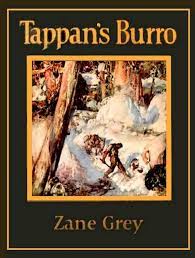
Tappan’s Burro – Zane Grey, 1923 ★★

Nature Gives and Takes

Nature writing has been with us longer than the printing press; whether it be by poets or philosophers it is one of the taproots of literary expression. Sometimes a nature book like The Hidden Life Of Trees will even sneak into the best-seller lists.

Zane Grey leveraged his popularity as a western writer to indulge his love for nature writing. His books teem with descriptions of natural wonder; he traveled the world seeking places unspoiled by men and considered the sea and the desert his religion.

If you follow the popular view, Grey was all about shootouts and dry gulching and riders of the purple sage. But read him and his true passion becomes clear. He was into rivers and mesas first, stories second, if that.

Sunday, December 4, 2022

The Go-Go Years – John Brooks, 1973 ★★★½

Capitalism Takes A Trip

At the dawn of the 1970s, terms like “conglomerates” and “hedge funds” fell outside the typical business vernacular. Corporate raiders were a frightening novelty. Could Wall Street have been so innocent not all that long ago?

John Brooks, a financial-news reporter for The New Yorker, had fun explaining how much of the wider cultural craziness of the 1960s wound up trickling into the world of big business, stocks, and bonds. The Go-Go Years details a ten-year span where once-staid brokers began growing out their hair, wearing patterned ties to work, and endangering capitalism at its core by chasing trends and ignoring fundamentals:

Friday, November 4, 2022

Julius Caesar – William Shakespeare, 1599 ★★★★½

No Prize for Second Place

A play that needs no introduction, Julius Caesar is a terrific starting place for knowing the art and majesty of William Shakespeare. Whether read as tragedy or history, it is an easy way to begin a love affair with the Bard.

It was the Folger edition of Julius Caesar that grabbed me back in the ninth grade, seeking distraction while flunking all my classes. Something about its brooding cover – a lean Roman figure against a marble backdrop – drew me in. It had it all: Indelible characters, hard-hitting action scenes, layers of ambiguity, and text that you can grasp readily thanks to the Folger practice of laying out the tricky parts on the opposite page.

Friday, October 28, 2022

The Man Who Knew Too Much – G. K. Chesterton, 1922 ★

No Justice, Please, We're British

The biggest mystery in this collection of mystery stories is why G. K. Chesterton is so renowned for writing them. Going by the evidence of this book alone, building a mystery was not something the man did well.

The eight tales all feature Horne Fisher, a brilliant yet somewhat languid product of upper-class Great Britain, back when class still meant something. In each story, Fisher analyzes a particular situation, offers up a few paradoxical aphorisms, leaps to some bizarre conclusion that Chesterton strains to show as somehow exactly right, then explains to his reporter friend Harold March why he won’t do a single thing to right whatever wrong has been committed.

Saturday, October 22, 2022

Bob And Ray: Keener Than Most Persons – David Pollack, 2013 ★★★

Two for the Show

These days, surrealism is well-established as a basis for comedy. You don’t even have to get laughs if you can twist what passes for reality in a uniquely enjoyable way. It wasn’t always so.

In the 1940s and 1950s, comedic premises were fairly square and straightforward. People did jokes and sketches and then played music or sold war bonds or whatever. There were cartoons and the Three Stooges, but those were widely seen as being for kids.

Then in 1946, two announcers found themselves on the radio together in Boston, Massachusetts, and American comedy began to change.